High Severity
Lateral Movement Detection
Once an attacker establishes a foothold in one pod, the goal becomes accessing higher-value services in adjacent namespaces. Lateral movement in Kubernetes leverages misconfigurations in RBAC and network policies that are common in fast-growing SaaS environments.
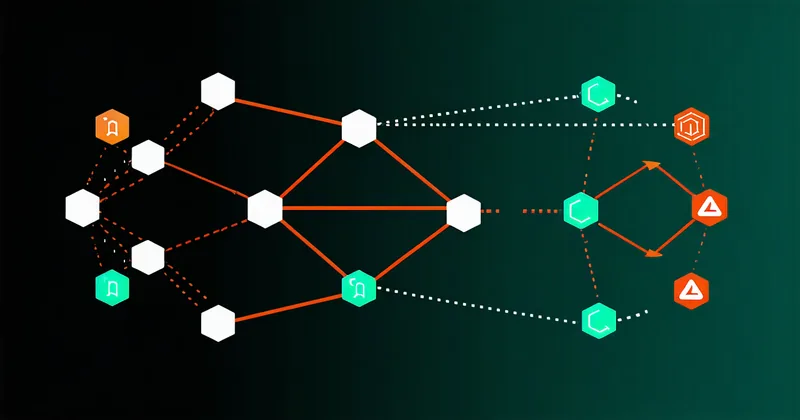
Lateral movement in Kubernetes: common patterns
Kubernetes clusters often run multiple workloads in separate namespaces with the assumption of isolation. But overly permissive RBAC, missing NetworkPolicies, and service account token auto-mounting create lateral movement paths that attackers exploit.
- Service account token theft — reading /var/run/secrets/kubernetes.io/serviceaccount/token from a compromised pod to access the K8s API
- Cross-namespace service access — connecting to services in adjacent namespaces that lack NetworkPolicy enforcement
- RBAC escalation via ClusterRole bindings — exploiting overly broad ClusterRole bindings to access secrets across namespaces
- Pod-to-Pod credential harvesting — scraping environment variables and mounted secrets from accessible pods via the API server
How Kubesentry detects lateral movement
- Service account token file access — alerts when a process reads the auto-mounted service account token file outside expected application paths
- Anomalous cross-namespace connections — detects network connections to services in namespaces with no prior connection history from the originating pod
- kubectl binary execution in containers — flags execution of kubectl or curl against the K8s API server (10.96.0.1) from non-privileged containers
- Audit log correlation — cross-references API server audit events for unusual GET/LIST operations on secrets or cross-namespace resources
- Namespace boundary network anomalies — baseline-compares network egress patterns per pod and alerts on new destination IP/port combinations
Response playbook
- Identify the originating pod and namespace. Review the service account token access event in the Kubesentry alert — note which service account was accessed.
- Assess the compromised service account's RBAC permissions. Run
kubectl auth can-i --list --as=system:serviceaccount:<ns>:<name>to understand blast radius. - Revoke the service account token. Delete and recreate the service account to invalidate the current token. Update any legitimate pods that use it.
- Audit K8s API server logs. Check for API calls made using the compromised token — look for GET on secrets, creation of new pods, or exec into other pods.
- Implement NetworkPolicy. Add deny-all-ingress/egress NetworkPolicies to the affected namespaces as immediate containment. Define explicit allow rules for required traffic.
- Disable service account auto-mount. Set
automountServiceAccountToken: falseon pods that don't require API server access.
Related detections
See lateral movement before it becomes a breach.
eBPF syscall + network + audit log correlation in a single agent.